Time to fill is the metric every staffing agency reports on and almost none of them are happy with. It's also one of the few numbers where buying more software doesn't reliably move it, which is confusing until you look at where the days actually go.
Most agencies already run some form of recruiting software. An ATS to post roles and track candidates, a CRM to manage the client relationship, maybe a scheduling tool bolted on. None of that is nothing. But time to fill isn't one slow step, it's several medium-slow steps stacked on top of each other, and a tool that only speeds up one of them barely moves the total.
Where the Days Actually Go
- Sourcing takes longer than it should. A recruiter manually searching job boards and past candidate pools for a role that's similar to one filled six months ago, without the system surfacing that match on its own.
- Screening piles up before anyone looks at it. Resumes sit in an inbox or an ATS queue until a recruiter has a free hour, and that hour doesn't come around as often as a client wants it to.
- Scheduling turns into an email thread. Coordinating a recruiter, a candidate, and sometimes a client contact across three calendars eats a day or two on its own, especially across time zones.
- The client can't see where things stand. Without live visibility, a client calls to ask for a status update, which pulls a recruiter off sourcing to answer a question the system should have already surfaced.
Add those up and a role that could fill in two weeks stretches to four, not because any single step is broken, but because none of the steps hand off to the next one automatically.
What Actually Compresses the Timeline
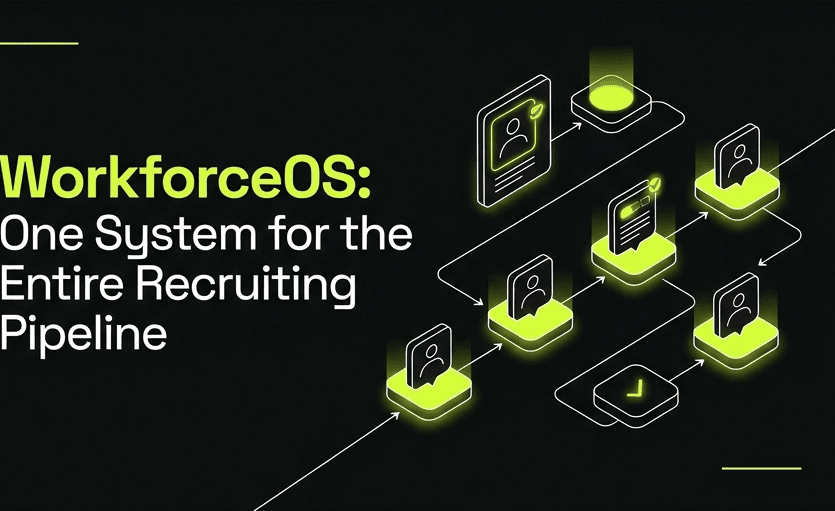
WorkforceOS treats time to fill as one pipeline instead of four separate tasks. A new application gets parsed and embedded the moment it arrives, then compared against the role brief and past placements, so a strong match surfaces without a recruiter searching for it by hand. Screening applies the client's rubric automatically and writes a scored justification, so a recruiter opens a shortlist instead of a raw inbox.
Scheduling reconciles recruiter and candidate availability directly instead of going through email, holding a slot the moment both sides are free. And because the client portal updates from the same pipeline, a client checking status sees it live instead of calling to ask, which means that call never happens and the recruiter keeps working the role instead of fielding it.
None of these steps is dramatic on its own. What compresses time to fill is that they stop waiting on each other.
Who Actually Sees This Move the Metric
This matters most for agencies making real hiring volume, staffing and recruitment agencies running ten to five hundred recruiters, IT staff augmentation and offshore development firms filling technical roles fast, and RPO providers and executive search firms where a client is watching time to fill as a contract metric. At fifty to five thousand placements a year, a few days saved per role adds up to a very different quarter.
Conclusion
Buying recruiting software doesn't automatically move time to fill, because most software speeds up one step and leaves the handoffs between steps exactly as slow as they were. The metric moves when sourcing, screening, scheduling, and client visibility stop being four separate waits and start being one pipeline that keeps moving on its own.
Want a system like this built for you?
Book a discovery call and we'll scope what it takes to automate your workflow.
Book a discovery call