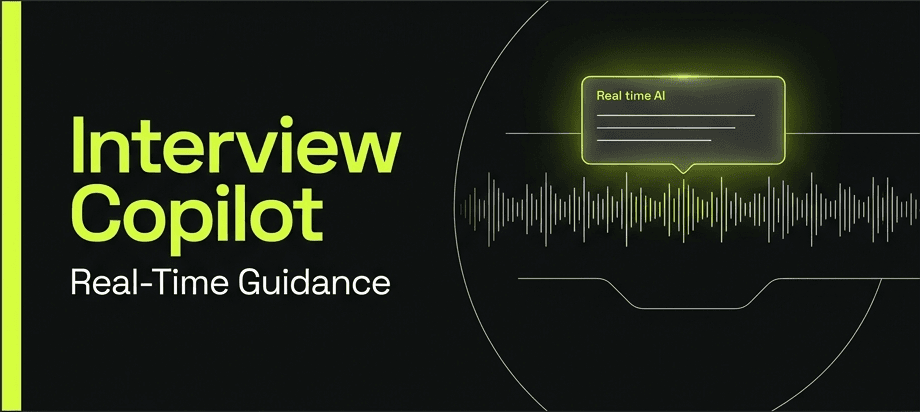
The traditional model of sales coaching happens entirely after the fact: a manager reviews a recorded call days later, points out where a rep fumbled an objection, and hopes the lesson sticks for the next call. By the time the feedback arrives, the deal it would have helped is often already decided.
Real-time objection handling software moves that coaching moment from "after the call, maybe" to "during the call, while it still matters."
How Real-Time Coaching Actually Works
The system listens to a live call — voice or video — and continuously analyzes what's being said. When it detects a recognizable pattern (a specific objection, a buying signal, a competitor mention, silence after a question), it surfaces a relevant, brief cue to the rep without interrupting the conversation itself. That might be a suggested response to a pricing objection, a reminder to ask a specific discovery question, or a flag that the rep has been talking for too long without checking in.
The distinction that matters: this isn't a script the rep reads verbatim. It's contextual guidance — what to emphasize, what to ask next, when to pause — delivered fast enough to actually change how the rest of the live conversation goes.
What the 2026 Data Shows on Win Rate
The results reported across the industry vary by methodology, which is worth being upfront about rather than citing the single most flattering number:
| Source | Reported Win-Rate Impact | Timeframe |
|---|---|---|
| Gartner 2026 Sales Enablement Report (per Coffee.ai's 2026 summary) | 8–12% improvement | Within 3 months |
| Broader industry range (per Knowlee's 2026 conversation intelligence overview) | 10–25% improvement | Varies |
| Realistic deployment range noted by the same sources | 5–15% | Typical, not best-case |
The honest framing: vendor case studies sometimes cite the top of these ranges, but the more conservative, deployment-wide numbers — 5–15% win-rate lift — are the reasonable expectation to plan around, not the ceiling.
Onboarding speed shows a similarly wide but consistently positive range: new hires ramp 30–50% faster with real-time AI coaching support, per the same Gartner-sourced analysis, with other industry sources reporting 20–50% faster ramp broadly.
The Call Review Coverage Problem This Solves
Beyond live coaching, there's a second, less-discussed benefit: review coverage. Teams without AI-assisted call analysis review roughly 3% of sales calls manually — a manager simply cannot listen to every call a team makes. Conversation intelligence tooling raises effective review coverage to around 95%, because the analysis happens automatically on every call rather than the small sample a manager has time to sit in on.
That matters for objection handling specifically, because it means patterns — which objections are costing the most deals, which reps handle a specific pushback well and which don't — become visible across the whole team's call volume, not just the handful a manager happened to review.
Where This Helps Most: Less-Experienced Reps
The clearest use case for real-time objection handling support is closing the gap between a team's strongest performer and everyone else. A rep with five years of experience has internalized responses to common objections; a rep three weeks into the role hasn't. Real-time cues give the newer rep access to that same pattern recognition in the moment, rather than making them wait months to build it through trial and error — which is consistent with the faster-ramp data above.
How Interview Copilot Works
Interview Copilot listens to live conversations and surfaces strategic cues — what to emphasize, what to ask, when to pause — without disrupting the natural flow of the call. The design goal is specifically to make less experienced team members perform closer to your best performers, turning conversation quality from something personality-dependent into something consistent across the team.
FAQ
Does real-time coaching make calls feel scripted or robotic? Done well, no — the cues are contextual prompts (what to address, what to ask), not verbatim scripts. The rep still speaks naturally; the system just reduces the chance of missing an important moment in the conversation.
How fast does the guidance actually appear during a call? Modern systems process and surface cues within roughly one to two seconds of the relevant moment in conversation — fast enough to be useful mid-call rather than arriving after the moment has passed.
Is the win-rate improvement consistent across experience levels? The clearest gains show up for less experienced reps, since the tool is effectively giving them access to pattern recognition a veteran already has internalized. Experienced reps see smaller relative gains but benefit from consistency and reduced missed follow-ups.
Does this replace manager call coaching? No — it expands what a manager can act on by surfacing patterns across far more calls than manual review would ever cover, and it provides in-the-moment support a manager physically can't deliver on every call in real time.
Coaching that arrives three days after the call already happened is coaching for the next call, not this one. Explore Interview Copilot →
Want a system like this built for you?
Book a discovery call and we'll scope what it takes to automate your workflow.
Book a discovery callRelated
AI Sales Coaching for New Reps: Cutting Ramp Time Without a Full-Time Mentor
New reps take months to ramp partly because manager time for live coaching is scarce. Here is how real-time AI coaching shortens the gap between hire date and first quota-hitting quarter, without pretending to replace a manager.
Conversation Intelligence Software: Closing the Gap Between Your Best and Average Reps
Every sales team has a wide gap between its top performer and everyone else. Conversation intelligence software is built specifically to close that gap — here is how, with real 2026 market and performance data.
Interview Copilot: Real-Time Guidance for the Calls That Matter Most
Interview Copilot listens live and surfaces contextual cues — what to emphasise, what to ask, when to pause — so junior team members perform closer to your best on high-stakes calls.